halal dating in the UK
Halal Dating in the UK, in Practice
- Islamic dating etiquette
- halal relationship boundaries
- courting in Islam UK
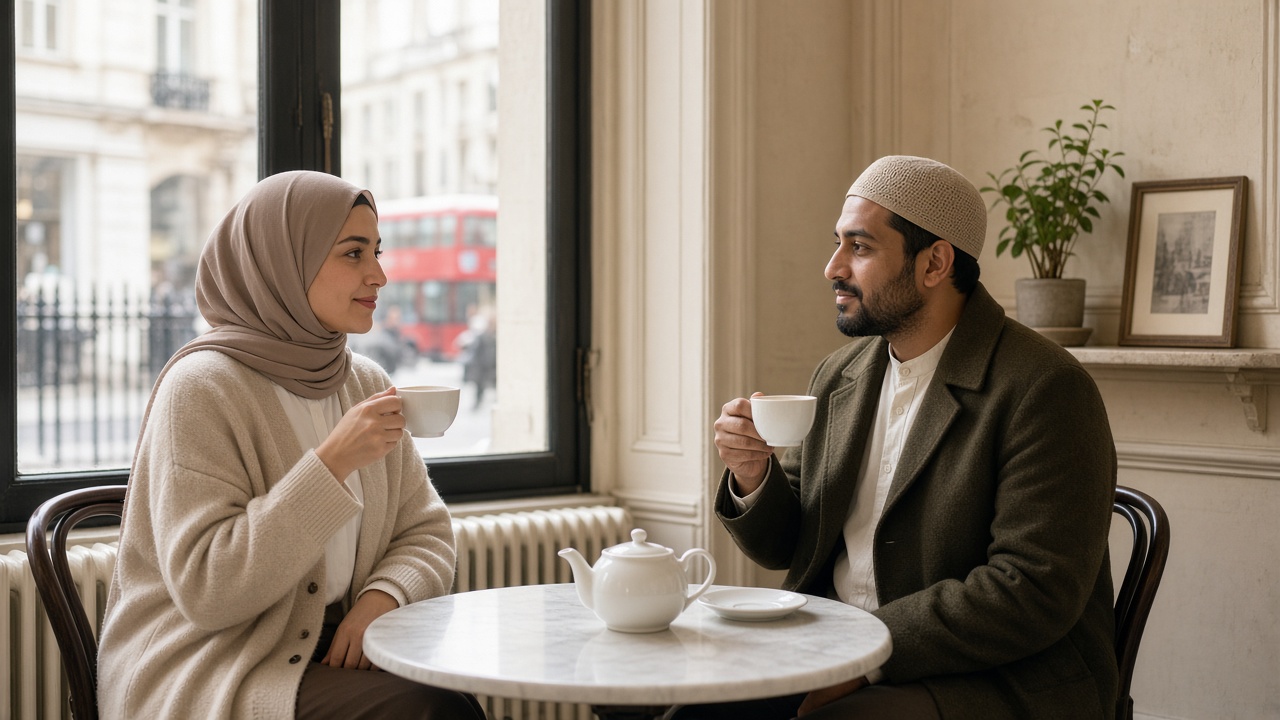
Halal dating in the UK is a phrase people use to describe courtship that is aimed at marriage and kept within the limits they believe their faith asks of them. It is not a single fatwa, and it is not a marketing label. In one household it means a parent or sibling is present from the first tea. In another it means two adults meet in public, tell their families early, and do not treat privacy as a reward for good conversation. Islamic dating etiquette, in British life, is mostly a set of habits you can actually keep on a Tuesday.
Scholars differ on what may happen before nikah, and this article is not a ruling. If you need a religious judgement, ask someone qualified who knows your situation. What follows is the practical shape many Muslims in Britain use when they want halal relationship boundaries that survive work, WhatsApp and winter.
The Muslim Council of Britain’s notes on the 2021 Census are a reminder of scale: British Muslims are young, urban and varied. Courtship advice written as if everyone lives with both parents and finishes work at five will fail a nurse on nights in Birmingham and a consultant in Manchester. Courting in Islam UK-wide has to fit real rotas.
Agree the boundary before the feeling
Write the boundary down while you are calm. Common lines include: we meet in public, we do not stay overnight, we do not speak in a way we would hide from a sibling, and physical intimacy waits for nikah. Some people add a chaperone for every meeting. Some allow a walk after the chaperone has already met both sides. The detail matters less than sharing it before you like each other enough to renegotiate it in the moment.
Halal dating in the UK gets messy when one person hears "we are getting to know each other for marriage" and the other hears "we are talking until it feels heavy." Use plain words. "I want to marry in the next year or two, and I want our families involved within a month if this continues" is a boundary. "Let's see" is a delay.
If your practice is stricter than your match's, do not treat that as a surprise to reveal after the third coffee. Muslim compatibility is easier to judge when prayer, Ramadan, and the role of family are on the table in week one.
Public on purpose
A cafe, a park, a museum lobby, or a restaurant with other tables occupied is not a lack of romance. It is the setting that makes Islamic dating etiquette easier to keep. Private flats, parked cars and long voice notes after midnight are where good intentions usually fray. You can be warm in public. You can ask serious questions in public. You do not need secrecy to prove sincerity.
Tell someone you trust the plan: who, where, when you will be home. That is not childish. It is how halal relationship boundaries stay intact when a meeting runs long and the last Tube is tempting. For ideas that work in the capital, see a halal first date in London. The same pattern travels: choose a place you can leave, and leave.
Phones need a rule too. Late-night chatting is where courting in Islam UK-style often slides from intention into intimacy nobody agreed. Some couples stop messages at a set hour. Some copy a parent into the thread once things are serious. Pick a rule you will keep on a lonely Sunday, not only on a motivated Monday.
Family is part of the etiquette
In plenty of British Muslim families, a conversation that never reaches the parents is not yet a marriage conversation. That can feel heavy if you are independent, older, or estranged. It can also be a protection. Parents ask about character in a way friends, who like the story, sometimes will not.
You do not have to hand over your entire history on day one. You do have to avoid a double life. If you would be ashamed for your brother to see the message thread, change the thread. Nikah and dating explains the questions worth settling before anyone books a hall: mahr, living arrangements, children, and what "soon" means.
People without nearby family can appoint a stand-in. An imam, an aunt by WhatsApp, or a married friend can play the role of witness. The point of Islamic dating etiquette is accountability, not a particular floor plan.
When backgrounds do not match
A Somali family in Cardiff and a Gujarati family in Leicester can both be devout and still expect different speeds. Culture is not deen, but culture is how deen shows up at dinner. Ask how previous marriages in the family were arranged, how much say the couple had, and what happens when someone says no. Those stories predict your next six months better than a shared playlist.
Halal relationship boundaries also include money and reputation. Who pays for tea is a small thing. Who is expected to pause a career, move city, or live with in-laws is not. Say the large thing early. Courting in Islam UK-wide fails when people collect affection and postpone logistics until a parent forces the conversation in public.
Repair, or stop
If a boundary breaks, name it within a day. "We stayed later than we agreed, and I do not want that to become normal" is a repair. Silence is how an exception becomes the relationship. If the other person mocks the boundary, treats a chaperone as an obstacle, or asks you to hide the meetings, believe that information. Halal dating in the UK is not a test of how much pressure you can absorb.
You can be kind and still end it. A short, clear message is better than a fade that leaves the other family planning a visit. Intention includes how you leave.
The aim is not a perfect record. It is a courtship you could describe, without editing, to the people who will stand at your nikah. If the description already needs edits, change the habits before you change your status.